UVa only provider in Virginia to offer tarlatamab for cancer
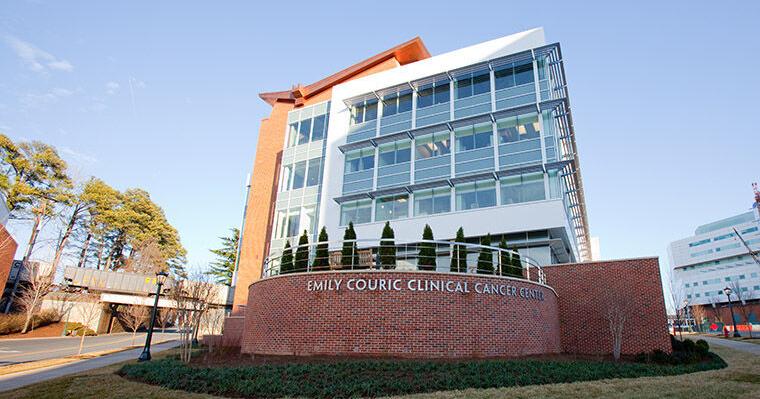
The University of Virginia Cancer Center is the first health care provider in Virginia to offer a new treatment known to significantly shrink tumors and extend the lifespan of patients suffering from small cell lung cancer.
The disease is the most aggressive form of lung cancer, and even with treatment, most patients with small cell lung cancer are dead within 24 months of diagnosis, according to the National Institutes of Health.

The Food and Drug Administration first approved the use of tarlatamab in May to boost the immune system of adults who are in the late stages of small cell lung cancer or did not already respond well to other treatments. The UVa Cancer Center began to administer the immunotherapy 26 days after approval with 16 patients having undergone tarlatamab infusions at the Charlottesville hospital to date.
“This treatment requires intensive monitoring and careful coordination among a large team of care providers,” Ryan Gentzler, a UVa Health lung cancer specialist, said in a statement. “We were able to treat our first patient so quickly after FDA approval thanks to successful collaboration and interdisciplinary efforts among our nurses, pharmacists, information technology team members and social workers.”

Gentzler
People who are deemed eligible to receive tarlatamab are connected with UVa Cancer Center’s nurse navigator program, which focuses on coordinating appointments, referrals and other logistics with patients to streamline the process and alleviate additional stresses. The center is one of only 56 cancer centers across the country to receive a “comprehensive” designation from the National Cancer Institute, recognizing exemplary cancer care and research.
“Our nurse navigators are just one example of how our team comes together to bring the latest advances in cancer care to our patients,” Richard Hall, another lung care cancer specialist at UVa, said in a statement. “Our thoracic oncology team is on the cutting edge of cancer treatments, and our experienced team has the expertise required to be among the first in the nation to offer groundbreaking new therapies like tarlatamab to our patients.”

Hall
Considered the most aggressive form of lung cancer, small cell lung cancer is typically treated with rounds of chemotherapy and immunotherapy, however, the cancer often metastasizes rapidly. According to the American Cancer Society, localized small cell lung cancer has a 30% five-year relative survival rate, meaning patients, on average, are about 30% as likely to live for at least five years after being diagnosed as those without small cell lung cancer. For comparison, the five-year relative survival rate for non-small cell lung cancer is 65%.
In a clinical trial, researchers found that tarlatamab reduced tumors in about 1 of every 3 people whose cancer continued to progress after at least two previous forms of treatment. Another striking discovery from the trial was that tarlatamab — which binds cancer cells with white blood cells, known as T cells, in order for the T cells to recognize and attack the tumor — managed to keep the cancer “at bay” for at least six months in more than half of the trial subjects, according to the National Cancer Institute.
“This is probably one of the most promising treatments being tested in small cell lung cancer right now,” said the institute’s senior investigator for cancer research, Anish Thomas, in a report on tarlatamab. “[The new findings are] hopeful for patients and the people who treat them, especially since this is such an aggressive disease with very few advances in treatment since the 1980s.”
link