Transdermal Skin Patches Market Companies Analysis
Introduction: A Market Quietly Powering the Future of Drug Delivery
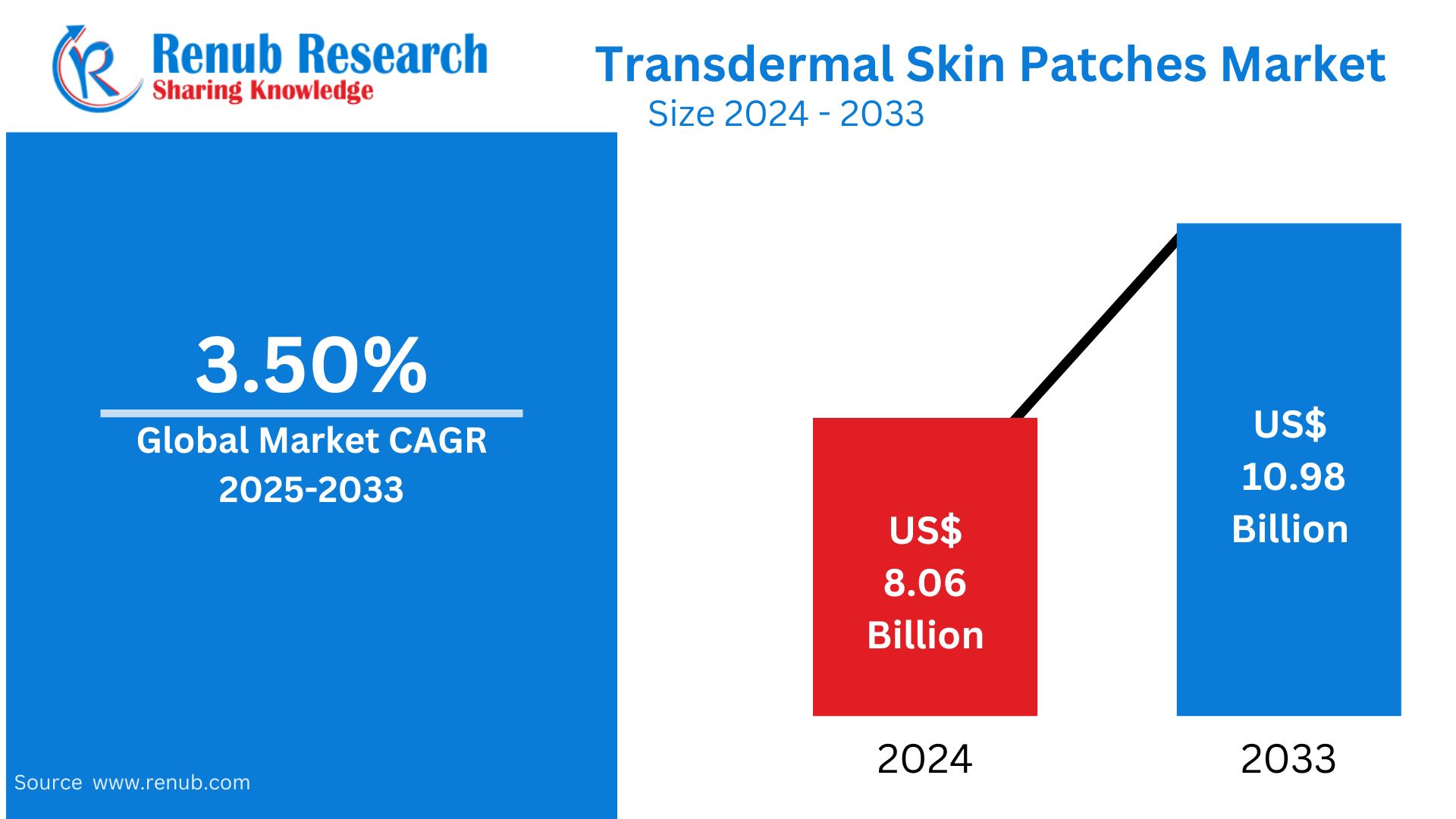
The global Transdermal Skin Patches Market is entering a pivotal phase of growth. According to Renub Research, the industry will rise from US$ 8.06 billion in 2024 to US$ 10.98 billion by 2033, expanding at a CAGR of 3.50% between 2025 and 2033. This modest yet steady momentum reflects growing demand for non-invasive, controlled-release drug delivery solutions capable of improving patient adherence and reducing the burden of frequent clinic visits.
Transdermal patches—ranging from iontophoretic and membrane-controlled patches to multi-layer, vapour-release, and micro-needle-enhanced systems—offer a simple but technologically advanced method for delivering medicines directly into systemic circulation. They are increasingly used for osteoporosis, HIV, migraine, Parkinson’s disease, hormonal therapy, Alzheimer’s disease, and cardiovascular disorders, making them essential for aging populations and chronic disease management.
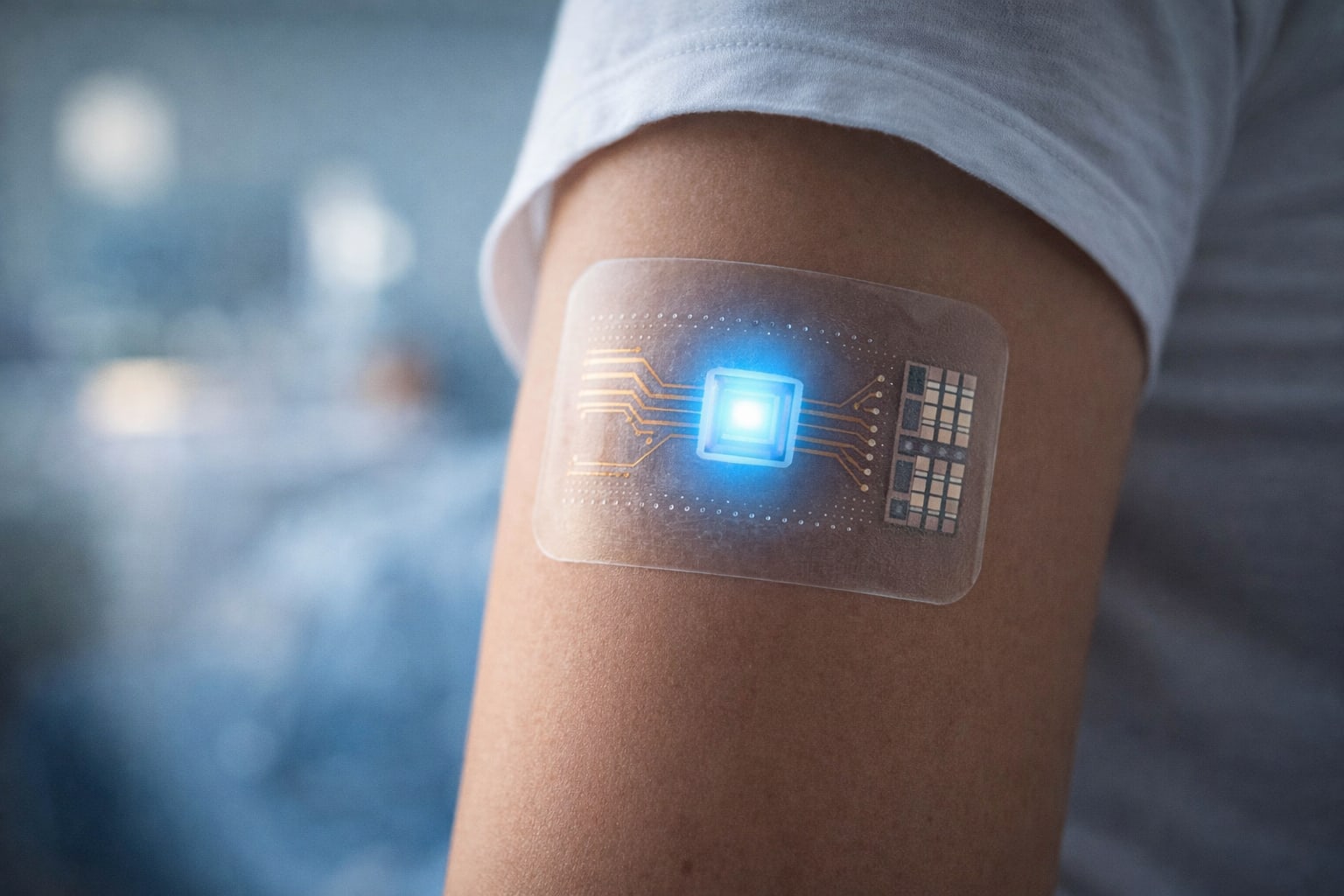
Simultaneously, the rise of digital health and wearable biosensors is redefining what a “patch” can do. The clearest example came in September 2024, when Abbott launched its Lingo OTC continuous glucose monitor, a smartphone-connected adhesive patch eliminating finger-stick blood tests. Such innovations are accelerating market adoption, particularly across the United States.
Against this backdrop, leading pharmaceutical and medical device companies are strategically expanding portfolios, investing in sustainability, and advancing next-generation transdermal delivery technologies.
Below is a consolidated analysis of the companies shaping this evolving market.
Key Players Shaping the Transdermal Skin Patches Market
Due to the broad competitive landscape, the following sections provide expertly condensed profiles that fit within a 1500-word editorial, highlighting company direction, sustainability initiatives, product strengths, and strategic advantages.
Novartis AG – Global Leader in Therapeutic Innovation
Founded: 1996 | HQ: Switzerland | Revenue (2023): US$ 51.7B
Novartis maintains deep expertise across cardiovascular, neurology, immunology, respiratory, and oncology care—therapeutic areas heavily reliant on long-term treatment adherence, where transdermal patches offer clear advantages. Its global manufacturing presence across the U.S., Europe, and Asia positions it well to support large-scale drug delivery solutions.
Strength: Robust biologics and specialty drug portfolio.
Opportunity: Integrating controlled-release technologies into chronic disease therapies.
Bayer AG – Expanding Transdermal Capabilities Through Healthcare & Consumer Health
Founded: 1863 | HQ: Germany | Revenue (2023): US$ 50.4B
Bayer’s strong foundation in women’s health, cardiovascular drugs, oncology, and dermatology supports its presence in transdermal therapeutics. Its global distribution network increases accessibility for hormone patches and pain-relief patches.
Strength: Wide OTC footprint and long-standing expertise in skin science.
Opportunity: Eco-friendly patch materials aligned with EU sustainability mandates.
Abbott Laboratories – Pioneering Wearable Health Monitoring
Founded: 1888 | HQ: USA | Revenue (2023): US$ 42.0B
Abbott is transforming transdermal technologies through smart health monitoring patches. The Lingo sensor patch exemplifies the shift toward digital, data-driven drug and biomarker monitoring, setting a new benchmark for non-invasive diagnostics.
Strength: Leadership in point-of-care and continuous monitoring devices.
Opportunity: Expansion of therapeutic-monitoring hybrid patches.
Johnson & Johnson – Integrating Sustainability With High-Impact Medical Systems
Founded: 1886 | HQ: USA | Revenue (2023): US$ 88.8B
J&J’s pharmaceutical and medical device divisions serve as a strong foundation for advanced transdermal solutions. The company is heavily investing in sustainability—targeting 100% renewable electricity by 2025 and net-zero emissions by 2045.
Strength: Large global manufacturing footprint for scaled patch production.
Opportunity: Next-generation neurology and immunology patches.
Teva Pharmaceutical Industries – Affordability, Access, and ESG Leadership
Teva stands out for its Healthy Future ESG strategy, achieving a 29% reduction in Scope 1 & 2 emissions since 2019 and targeting net-zero by 2045. The company excels at expanding access through affordable generics and low-cost therapeutics.
Strength: Wide portfolio of cost-effective drug-delivery systems.
Opportunity: Sustainable patch manufacturing & scalable generics-based transdermal therapies.
3M Company – Material Science Leader Driving Transdermal Innovation
3M remains a core innovator in adhesives, films, membranes, and micro-replication technologies—all fundamental to patch construction. With thousands of patents and powerful R&D culture, 3M influences material standards across the transdermal ecosystem.
Strength: Unmatched materials engineering capabilities.
Opportunity: Production of biodegradable and recyclable patch components.
Agile Therapeutics – Focused Innovation in Women’s Health
Agile Therapeutics carved a niche with Twirla, its FDA-approved weekly contraceptive patch known for low-dose hormone delivery and patient convenience. Following its 2024 merger with Insud Pharma, Agile gains wider distribution via Exeltis in the U.S.
Strength: Market recognition in female contraceptive patches.
Opportunity: International expansion via Insud Pharma’s network.
GSK plc – Strong R&D Investments Supporting Patch-Based Therapies
GSK continues investing heavily in R&D, with £4.4B spent in 2022 and over 50 active clinical programs. Its vaccine and respiratory dominance strengthens its position in chronic disease management—an area aligned with transdermal therapy growth.
Strength: Global regulatory experience and deep emerging-market presence.
Opportunity: Expanding patches for respiratory and neurology care.
Other Prominent Players Contributing to Market Growth
To maintain editorial length, the following companies are summarized based on their strategic roles:
Nitto Denko Corporation
A major Japanese innovator in films, membranes, and adhesive technologies crucial to patch manufacturing.
Strength: Precision engineering for patch coatings and drug-matrix stability.
Luye Pharma Group
Focused on CNS and oncology patches with strong R&D-driven formulations.
Opportunity: Global expansion beyond East Asia.
Beiersdorf AG
Known for skin health expertise through brands like Nivea; increasingly active in therapeutic skin applications.
Strength: Dermatological research capacity.
Viatris Inc.
Strong generics & biosimilars footprint; scalable manufacturing for high-volume transdermal products.
Strength: Low-cost production efficiency.
Hisamitsu Pharmaceutical Co.
A global leader in pain-relief patches, especially in Asia and the U.S. with the Salonpas brand.
Strength: Brand dominance in OTC transdermal analgesics.
LTS Lohmann Therapie-Systeme AG
A dedicated transdermal patch producer for multiple pharma partners.
Strength: End-to-end transdermal system development.
Sparsha Pharma
India-based specialist in drug-in-adhesive technologies and microneedle patches.
Opportunity: Emerging-market expansion.
AdhexPharma
Expert in customized transdermal and mucosal delivery systems for niche therapies.
Strength: Flexible R&D services.
Teikoku Pharma USA
Strong in ketoprofen and lidocaine patch technologies for pain management.
Strength: Pain-relief innovation.
Biotts
Polish startup gaining recognition for deep-permeation drug carriers enabling difficult-to-deliver molecules.
Opportunity: Partnerships with big pharma.
Medherant Limited
Spin-out from the University of Warwick, known for its TEPI Patch platform for improved drug permeation.
Opportunity: Licensing opportunities with global pharma.
Market Outlook: Forecast & Trends
Historical Trends
Steady demand for pain-relief and hormone replacement patches
Shifts from oral to transdermal therapies for chronic conditions
Growing patient preference for non-invasive drug delivery
Forecast Analysis (2025–2033)
Market to reach US$ 10.98 billion by 2033
Growth supported by wearable biosensor integration
Rising chronic disease prevalence boosts adoption
Expansion of microneedle patches expected to reshape delivery efficiency
Market Share Insights
North America remains the dominant market
Asia-Pacific registers the fastest expansion
Companies with strong R&D and sustainable manufacturing will lead the competitive landscape
Final Thoughts: The Future of Transdermal Drug Delivery
The transdermal skin patches market is shifting from simple adhesive drug carriers to smart, sustainable, and patient-centric systems. As chronic diseases increase and digital health integration accelerates, patches will play a transformative role in personal healthcare. Companies investing in material innovation, ESG compliance, and therapeutic diversification are best positioned to capitalize on this unfolding opportunity.
With big pharma, specialized biotech firms, and medical device innovators all active in this space, the next decade will see transdermal patches evolve into highly intelligent, data-enhanced drug delivery platforms—marking a new era for modern therapeutics.
link