The growing science behind the skin-mental health connection

This story is from The Pulse, a weekly health and science podcast. Subscribe on Apple Podcasts, Spotify, or wherever you get your podcasts.
Find our full episode on mental health and appearance here.
Summer Forlenza has had eczema since she was a toddler, so she grew up hyperaware of cats, dust, grass, flowers, and anything that could trigger her skin.
“You kind of walk into any new space and do a little bit of a scan: okay, are there scented candles burning? Are there animals here? Is there carpet?”
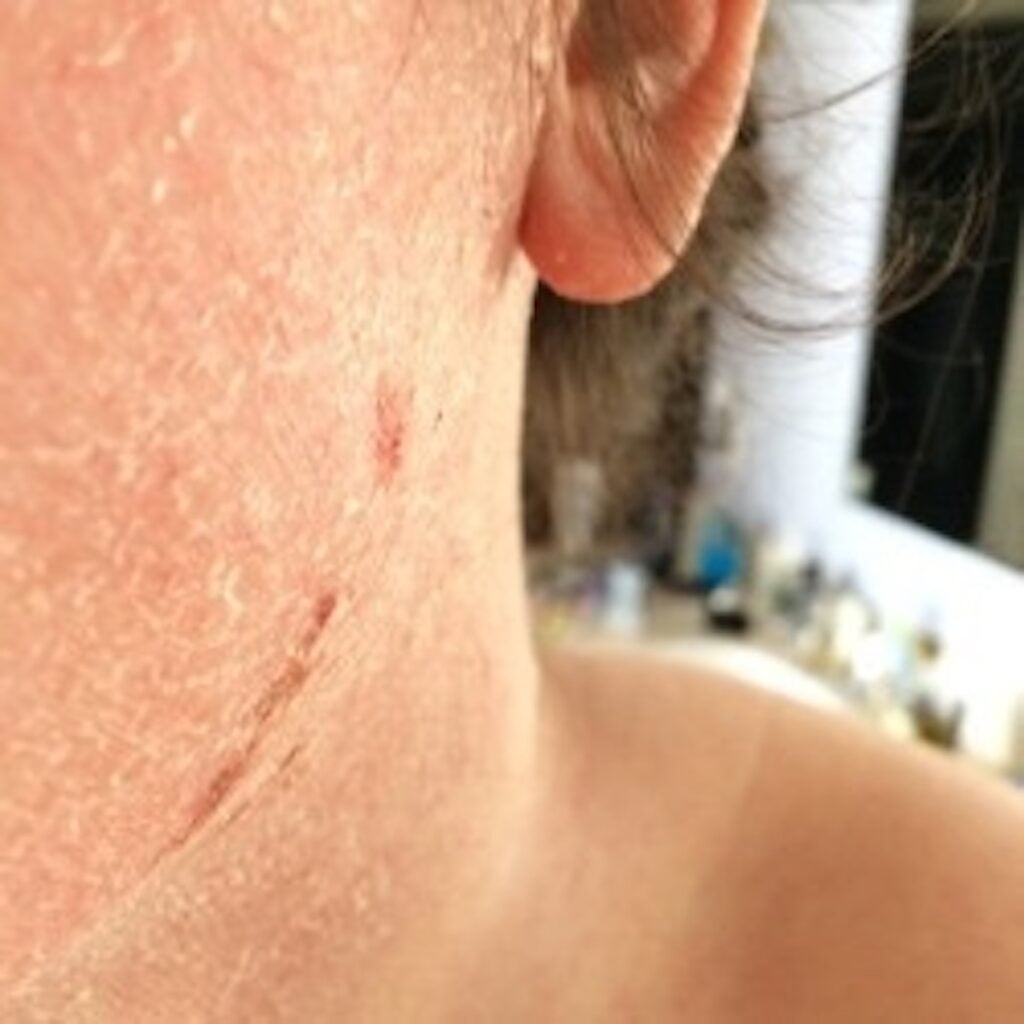
During severe flare ups, her skin would crack and ooze.
“Your skin is just sort of open and weeping and will stick to clothes, to pillowcases, to things around you,” Forlenza said. “It became much more painful at that stage because it was kind of just covered in like raw wounds all the time.”
She tried diets, baths, lotions, and various medications, but nothing really worked. She looked visibly different from other children, and her condition made it hard for her to have much of a social life because she was home a lot of the time.
When she got older, her eczema showed up more on her face. All this affected her mental health.
“There’s a lot of anxiety and sometimes a desire to kind of hide or isolate because of it.”
But she also noticed that when her skin flares up, it leads to more depression and anxiety. Other patients have also reported stress as a common trigger for eczema flare ups, which can in turn lead to anxiety and depression.
Over time, she came to realize that her treatment plan has to include her mental as well as physical health. Now, she is a therapist herself, and has spoken about the connection between eczema and mental health in her work with the National Eczema Association.
More clinicians and researchers are paying attention to the connection between skin health, and mental health, as part of a growing field called psychodermatology. Back in the 1990s, the field’s professional group, the Association for Psychoneurocutaneous Medicine of North America, had just eight members, and now it has 75, said psychiatrist Ladan Mostaghimi, one of the association’s board directors. This year, they will host the first World Congress of Psychodermatology in Türkiye, in association with a meeting of the European Society of Dermatology and Psychiatry.
More than 20 years ago, at the University of Wisconsin-Madison, Mostaghimi convinced the departments of psychiatry and dermatology to open a clinic that specializes in treating the mental health concerns of people with skin conditions.
She said that opened up a whole new layer of care. She explained that dermatologists treat the affected areas of a patient’s skin, but a psychodermatologist would also check for connected mental health problems.
For instance: rather than just treating acne, a psychodermatologist would also check for anxiety and depression, which people with acne are more likely to suffer from.
“Psychodermatologists take care of both acne and mental health issues created by it. And this is the main difference in approach.”
link