Sweat Strengthens New Skin-Safe Adhesive for Medical Devices
Thank you. Listen to this article using the player above. ✖
Want to listen to this article for FREE?
Complete the form below to unlock access to ALL audio articles.
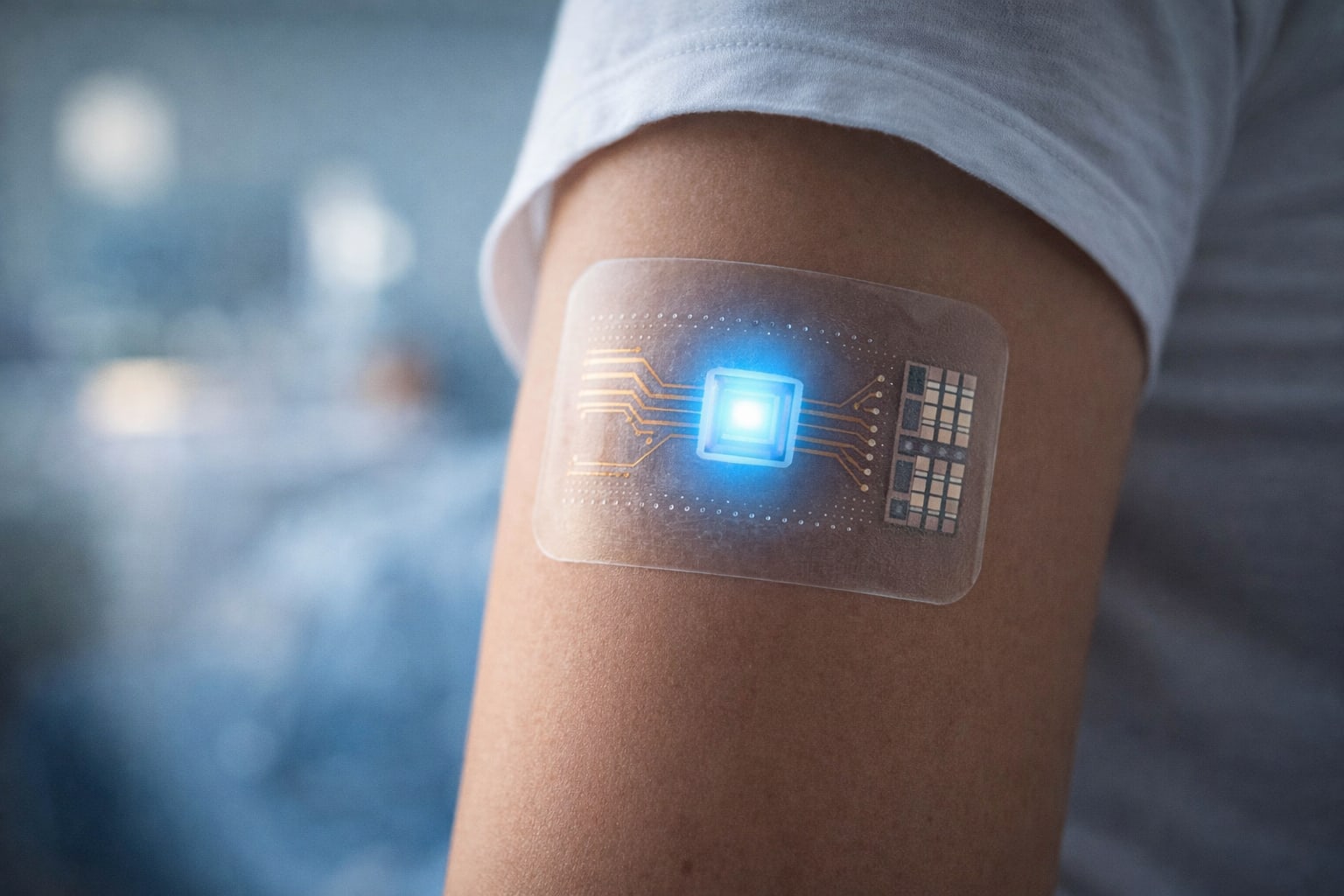
Wearable healthcare devices, such as glucose monitors and heart monitors, are popular due to their ability to gather real-time data that supports users’ health and safety.
However, despite their benefits, these devices must often be worn on the arms or chest for a long period of time. They can irritate the skin, cause allergic reactions, and become obstructed by moisture and sweat.
Dr. Jaime Grunlan, Leland T. Jordan ’29 Chair Professor in the J. Mike Walker ’66 Department of Mechanical Engineering at Texas A&M University, has developed a new type of adhesive — the first of its kind — that could offer a more comfortable alternative for medical device users.
This research was recently published in Macromolecular Rapid Communications.
For many years, Grunlan has worked to develop one-pot polyelectrolyte-complex (PEC) coatings for flame-retardant treatments on materials such as foam, fabric and wood. When he realized the inherent properties of PECs, such as their stickiness, he saw an opportunity to expand the use of PEC adhesive to wearable biomedical devices.
Most current technologies use hydrophobic, pressure-sensitive adhesives to adhere to various parts of the body. Although practical and often necessary, these commercial-grade devices use solvent-based adhesives consisting of acrylates, methacrylates, or colophonium, which can irritate the skin, with users reporting rashes, inflammation, itchiness and redness.
In contrast, since PECs are water-based, the potential discomfort and irritation on the skin could be reduced. Additionally, its water-based nature would mean moisture would likely improve adhesion. For example, the salt in sweat could increase the level of adhesion.
“To our knowledge, no one has used a PEC as an adhesive for wearable medical devices,” said Grunlan. “We were able to develop and patent a PEC that can match the adhesive strength of 3M Tegaderm adhesive. Tegaderm is a ‘cyanoacrylate’ polymer that is solvent-based, but many people complain due to the skin irritation that often comes along.”
This work is still in its early stages but offers a unique alternative to traditional adhesives with many positive benefits for people with diabetes, heart problems, sleep disorders and more.
Reference: Montemayor MD, Iverson ET, Dahle LR, et al. Polyelectrolyte complex coacervate adhesive for wearable medical devices. Macromol Rapid Commun. 2025:2500117. doi: 10.1002/marc.202500117
This article has been republished from the following materials. Note: material may have been edited for length and content. For further information, please contact the cited source. Our press release publishing policy can be accessed here.
link