Study finding 2,000 pediatric deaths may be preventable yearly highlights importance of child healthcare in East Tennessee
KNOXVILLE, Tenn. (WVLT) – A new national study, included in a report from InvestigateTV, has found the vast majority of emergency departments in U.S. hospitals are not fully equipped to treat pediatric patients. It’s a troubling figure, only exasperated by hospital access in rural areas of East Tennessee.
The research, published in the Journal of the American Medical Association, found that just 17% of emergency rooms across the county meet the standard for what it calls “high pediatric readiness.” Getting the qualification means having child-specific operation procedures, staff training and appropriately-sized equipment.
WVLT News received a statement from Dr. Michelle Hall. She’s the chief medical information officer at East Tennessee Children’s Hospital, and she outlined some of the steps the pediatric-specific hospital takes to treat kids.
“Children are not small adults. They are still growing and developing, which is why specialized skills, procedures, and equipment are so vital to all pediatric care,” Hall said. “Hospitals dedicated to only treating children have entire staff that are educated and trained for children as opposed to adult hospitals who may have some training, some experience or none at all.”
A survey from 2021, used in a state report from this year, found Tennessee hospitals had an average pediatric readiness score of 82 out of 100.

ETCH is a special case. As a child-focused hospital, there’s no need to swap out everyday equipment or procedures for child-specific ones in an emergency situation, because the standard operations at the hospital all involve pediatric patients.
“Children’s hospitals have tailored facilities in all capacities ready to take care of children,” Hall said. “In an emergency situation, there is no need to adjust from adult care since the hospital is ready when time matters most.”
Dr. Nathan Kuppermann of Children’s National Hospital in Washington, D.C. co-authored the research. He said more than 2,000 children’s lives could be saved each year with better pediatric readiness.
What can that readiness look like? Hall broke it down:
“For example, in an emergency situation, pediatric medication dosing is based on each child’s weight, making precision absolutely critical,” Hall said. “When a weight can’t be obtained, a team uses pediatric-specific tools to estimate safely and accurately. Pediatric hospitals have different disease processes and presentations than adult facilities, which allows them to recognize subtle signs, make more accurate diagnoses, and begin treatment quickly.”
For those in high-population areas with access to hospitals like ETCH, child-specific treatment can be easier to find. However, WVLT News reported in 2024 that rural hospital access in general, regardless of whether or not a patient is a child, can be hard to find.
Previous Coverage: The Healthcare Crunch | East Tennessee communities fight to keep rural hospitals
The Tennessee Hospital Association lists only one dedicated pediatric hospital in East Tennessee: ETCH in Knoxville. It means that those living outside of the Knoxville area have longer to go if they need child-specific care, making pediatric readiness especially important in the region.
The research also outlined how much money it would take to boost hospital readiness across all 50 states. Tennessee ranked well; the data showed it would only cost an investment of $1.74 per patient to reach universal readiness in the Volunteer State. That cost was as high as $12 per patient in some states.
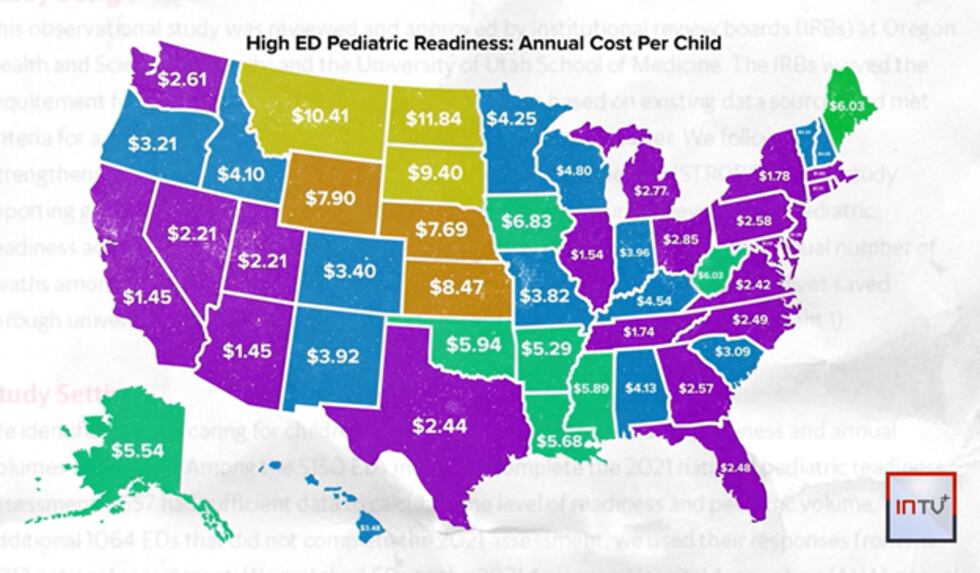
It means, compared to other states, many of Tennessee’s emergency rooms are more equipped to deal with pediatric patients. Tennova Healthcare, which operates many hospitals in East Tennessee, said they prep their emergency rooms with pediatric patients in mind.
“We have pediatric specific equipment and supplies, as well as pediatric care protocols to safely treat acute medical conditions such as broken bones, lacerations and general illnesses,” Tennova’s representative said in a statement over email. “Our emergency room physicians and emergency room nurses are also required to maintain PALS certification which means they can administer Pediatric Advanced Life Support procedures.”
As it stands, Delaware is the only state where every emergency room meets the standard for high pediatric readiness.
Copyright 2025 WVLT. All rights reserved.
link