Pharmerging Nations Redefining Global Healthcare Growth:
Pharmerging Market
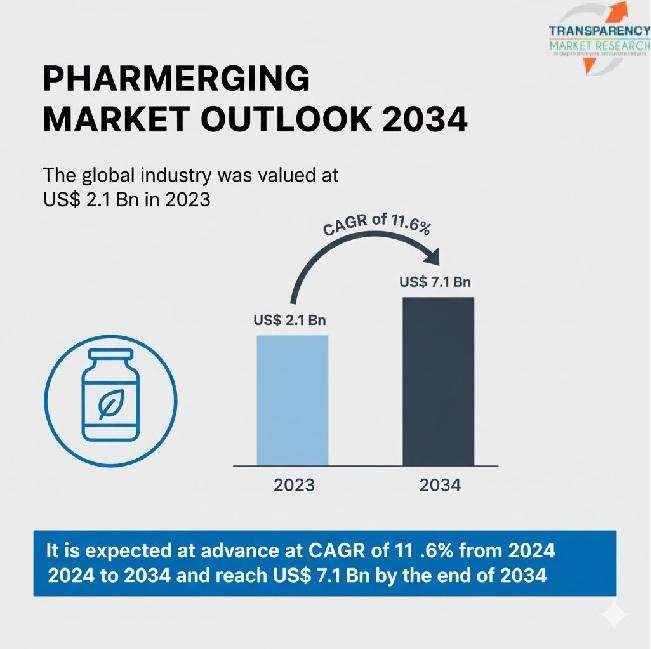
The Global Pharmerging Market, valued at US$ 2.1 Bn in 2023, is set to witness rapid expansion, projected to reach US$ 7.1 Bn by 2034, growing at a strong CAGR of 11.6% from 2024 to 2034. This fast-paced growth underscores the increasing importance of pharmerging countries-an economic group representing emerging nations with accelerating pharmaceutical demand, evolving regulatory infrastructures, rising healthcare investments, and expanding patient populations. These countries, including large markets such as China, India, Brazil, Russia, Mexico, Indonesia, Turkey, and South Africa, are reshaping the pharmaceutical innovation and consumption landscape, creating new opportunities for drug manufacturers, healthcare distributors, and technology providers worldwide.
Dive Deeper into Data: Get Your In-Depth Sample Now!
https://www.transparencymarketresearch.com/sample/sample.php?flag=S&rep_id=8200
Expanding Healthcare Access Fuels Rapid Pharmaceutical Growth
One of the defining forces behind the pharmerging market’s surge is the significant improvement in healthcare accessibility across developing nations. Over the past decade, governments have increasingly prioritized healthcare infrastructure, investing in hospitals, public insurance schemes, subsidized medicine programs, and diagnostic expansion. This shift has brought millions of new patients into the formal healthcare system, dramatically increasing demand for both branded and generic pharmaceuticals.
As individuals gain access to medical consultations, government-funded prescriptions, and chronic disease management programs, demand for medications such as antihypertensives, antidiabetics, antibiotics, and vaccines continues to rise sharply. In many pharmerging nations, the rapid urbanization trend has also contributed to improved access to healthcare facilities, enabling more frequent treatments and earlier diagnoses. This structural expansion of healthcare ecosystems is expected to remain a major catalyst for pharmaceutical consumption through 2034.
Rising Income Levels and a Growing Middle Class Strengthen Market Demand
Economic growth across emerging nations has expanded the size and purchasing power of the middle class, reshaping consumer behavior concerning health and wellness. As household incomes increase, individuals tend to spend more on premium healthcare services, branded drugs, dietary supplements, and preventive care solutions. This shift is especially pronounced in countries such as China and India, where millions move into higher-income brackets annually.
Additionally, lifestyle transitions-including sedentary work environments, dietary changes, and increased stress levels-have led to a sharp rise in lifestyle diseases. Growing awareness around long-term health risks has strengthened demand for chronic disease management medications and preventive therapies. Pharmaceutical companies are adjusting their strategies accordingly, expanding product portfolios and tailoring distribution networks to cater to the needs of the rising middle-class demographic.
Chronic Disease Burden Accelerates Pharmaceutical Consumption
A rapid epidemiological transition is underway in pharmerging markets. The prevalence of chronic, non-communicable diseases such as diabetes, cardiovascular disorders, respiratory illnesses, and cancer has increased significantly. For example, India and China now account for some of the world’s highest diabetes populations, creating enormous demand for insulin therapies, oral antidiabetics, and diagnostic solutions.
This chronic disease surge is partly attributed to aging populations, unhealthy dietary patterns, pollution, and genetic dispositions. As chronic conditions require long-term or lifelong medication support, they contribute to stable, recurring pharmaceutical sales. Governments and private insurers are also expanding reimbursement policies for managing such diseases, further stimulating market growth. Through 2034, chronic disease treatment is expected to remain a dominant driver, influencing trends in drug development, manufacturing capacities, and healthcare delivery.
Strengthening Local Manufacturing and Generic Drug Expansion
Pharmerging countries have rapidly become hubs for generic drug production, supported by government incentives, cost-efficient labor pools, and expanding R&D capabilities. India remains a leading global supplier of generic medicines, while China continues to solidify its dominance in active pharmaceutical ingredient (API) manufacturing.
Local manufacturing not only reduces dependency on imports but also lowers treatment costs, supporting broader healthcare inclusion. Several nations are also investing heavily in manufacturing modernization, adopting Good Manufacturing Practices (GMP), advanced quality control technologies, and digitized supply chains. As regulatory frameworks in pharmerging markets strengthen, confidence in domestically produced pharmaceuticals is expected to rise, creating fertile ground for market growth.
Buy Now:
Regulatory Reforms Encourage Innovation and Foreign Investment
A wave of regulatory modernization is sweeping across emerging economies, aimed at improving drug approval efficiency, safety standards, and global alignment. Countries such as China and Brazil have introduced accelerated review pathways, harmonized registration requirements, and enhanced pharmacovigilance systems. These reforms not only streamline the introduction of innovative therapies but also attract global pharmaceutical companies seeking expansion opportunities.
Foreign investment in local biotechnology firms, contract development and manufacturing organizations (CDMOs), and healthcare innovation centers has grown significantly. International companies view pharmerging nations as key expansion destinations due to lower manufacturing costs, rising local talent pools, and enormous unmet medical needs. This convergence of reform and investment is pushing the pharmerging market toward more innovation-driven growth from 2024 to 2034.
Urbanization and Digital Health Adoption Transform Patient Engagement
Rapid digital transformation across emerging markets is reshaping how patients access healthcare. Telemedicine platforms, e-pharmacies, digital diagnostics, mobile health apps, and AI-driven clinical tools are becoming widely adopted due to increased internet access and smartphone penetration. These technologies bridge gaps in availability, affordability, and access to healthcare professionals.
E-pharmacy services, enabled by widespread digital payments and logistical networks, have revolutionized medicine delivery in countries such as India, Indonesia, and Mexico. They offer transparency in pricing, improved access to chronic medications, and doorstep delivery-especially in underserved regions. As digital health adoption grows, it supports sustained pharmaceutical demand and reduces friction in patient care pathways.
Top Companies:
Abbott Laboratories
Koninklijke Philips N.V.
F. Hoffmann-La Roche Ltd.
Merck & Co., Inc.
Novartis AG
Johnson & Johnson
Teva Pharmaceutical Industries Ltd.
AstraZeneca
GlaxoSmithKline plc
Lupin
Tata Consultancy Services Ltd.
Sun Pharmaceutical Industries Ltd.
Huadong Medicine Co., Ltd.
Pharmerging Region Profiles: Key Growth Hotspots
China remains the largest pharmerging market, driven by massive healthcare spending, strong local manufacturing, and escalating chronic disease incidence. India is witnessing major expansion fueled by generic manufacturing leadership, strengthened healthcare policies, and rising insurance penetration. Brazil and Russia continue to grow due to large patient populations, government-backed healthcare programs, and foreign investment.
Southeast Asia-including countries like Indonesia, Thailand, and Vietnam-represents the next wave of high-growth markets, supported by young populations, urbanization, and rapid digital adoption. Africa’s emerging economies, such as South Africa and Nigeria, offer early-stage but high potential due to expanding healthcare infrastructure and increasing chronic disease prevalence.
Future Outlook: Pharmerging Nations Poised to Become Global Growth Engines
The future of the global pharmaceutical industry is increasingly centered around pharmerging nations. These markets are experiencing a convergence of demographic expansion, economic improvement, digital acceleration, and strengthened healthcare systems. By 2034, the industry’s journey from US$ 2.1 Bn to US$ 7.1 Bn will represent not only economic growth but also a transformation in global healthcare dynamics.
As pharmaceutical companies look toward the next decade, pharmerging nations will serve as strategic pillars for manufacturing, consumption, innovation, and competitive expansion. With rising demand across all therapeutic segments, evolving regulations, and technology-enabled healthcare systems, the pharmerging market is positioned to shape the future trajectory of global medicine.
Explore Latest Research Reports by Transparency Market Research:
Microcontrollers Market: https://www.transparencymarketresearch.com/microcontrollers-market.html
Warehouse Automation Solutions Market: https://www.transparencymarketresearch.com/warehouse-automation-solutions-market.html
AI in Drug Discovery Market: https://www.transparencymarketresearch.com/ai-in-drug-discovery-market.html
Active Pharmaceutical Ingredients (API) Market: https://www.transparencymarketresearch.com/active-pharmaceutical-ingredients.html
Vegan Chocolate Market: https://www.transparencymarketresearch.com/vegan-chocolate-market.html
About Transparency Market Research
Transparency Market Research, a global market research company registered at Wilmington, Delaware, United States, provides custom research and consulting services. Our exclusive blend of quantitative forecasting and trends analysis provides forward-looking insights for thousands of decision makers. Our experienced team of Analysts, Researchers, and Consultants use proprietary data sources and various tools & techniques to gather and analyses information.
Our data repository is continuously updated and revised by a team of research experts, so that it always reflects the latest trends and information. With a broad research and analysis capability, Transparency Market Research employs rigorous primary and secondary research techniques in developing distinctive data sets and research material for business reports.
Contact Us:
Transparency Market Research Inc.
CORPORATE HEADQUARTER DOWNTOWN,
1000 N. West Street,
Suite 1200, Wilmington, Delaware 19801 USA
Tel: +1-518-618-1030
USA – Canada Toll Free: 866-552-3453
This release was published on openPR.
link