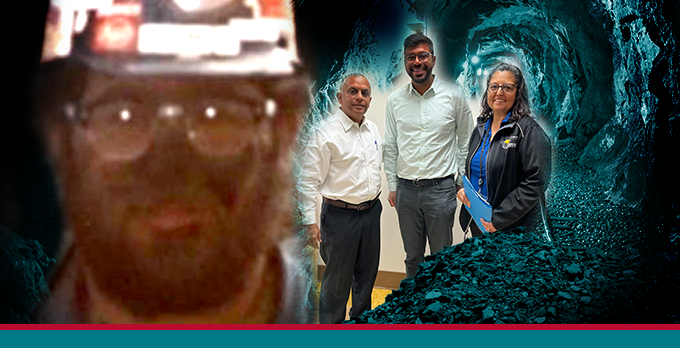
How a UNM Pulmonologist and Rural Hospital Health Care Team Help the Black Lung Coal Miners of New Mexico and Beyond
The Miners Wellness ECHO Program is another important part of the Miners Colfax Medical Center and UNM partnership.
Project ECHO, a nonprofit organization at the UNM Health Sciences Center, connects primary care providers with specialists so they can learn best practices through its telementoring model.
 Its goal—to improve access to specialty care in underserved areas, including Raton—supports the in-person teamwork that Sood and the Black Lung team provide and extends a virtual community of expertise across the state and the country.
“What we’ve learned in the process of taking care of a miner is that it’s a multi-dimensional process that involves access to other professionals as well,” Sood said, referring to the lawyers, benefits counselors, home health professionals, and respiratory therapists who participate in Project ECHO. The Miners Wellness ECHO is a way for participants to learn from each other, he said.
Treating miners and others working in dangerous physical occupations in remote parts of the country has become Sood’s specialty. After receiving his medical degree at the All India Institute of Medical Sciences and a master of public health degree at Yale, Sood worked in Nevada caring for workers at the Nevada Test Site, where nuclear weapons were tested, followed by the coal mines of southern Illinois, where he first encountered Black Lung Disease.
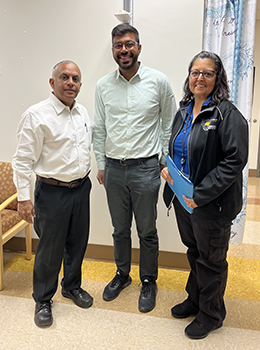
On a recent monthly visit to Raton, Sood and the Black Lung Team at Miner’s Colfax saw four miners and four non-miners. Each miner’s chest X-ray indicated Black Lung Disease, according to Sood, who had reviewed them all before the visits. The men all had undergone a pulmonary evaluation – a physical exam, a pulmonary function test and arterial blood gas tests, which measure blood oxygen levels during strenuous exercise on a stationary bike.
These results would determine whether they qualified for miner’s monthly benefits, established by the Black Lung Benefits Act, a federal law that provides monthly benefits and medical coverage to coal miners (or their surviving dependents) who have developed Black Lung Disease as a result of their work. In 2023, the monthly benefit for a miner with no dependents was $737.90, but it can be as much as $1,475.80 per month for miners with three or more dependents.
But coal companies, who pay out the benefits, regularly dispute claims of Black Lung Disease on X-rays and in the battery of tests performed by Sood and the Black Lung team, he said. None of the four miners seen this day in Raton qualified for benefits, although, like former miner Steve Segura, they have been diagnosed with Black Lung Disease.
Although these laws were designed to favor miners, they have been weakened by disputes over whether a miner’s Black Lung Disease diagnosis is valid, Sood said. “Black Lung is a classic example of how a good law was utilized by some in a bad way to really hurt the miner instead of helping them.”
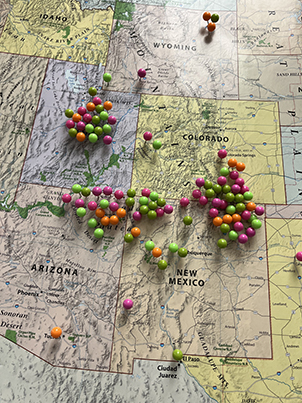 Black Lung Disease was the underlying or contributing cause of death for 75,178 miners from 1970-2016, according to the National Institute for Occupational Safety and Health.
Sood advises miners come in every two years to see how the slow-moving disease has progressed and to see if their test results meet the criteria to receive benefits. In the meantime, he encourages them to maintain a healthy lifestyle.
Helping those whose ability to breathe has been compromised is a driving force behind his work as an occupational pulmonologist. For Sood, the work has a personal dimension.
“Anyone who immigrated into this country has a very distinct memory of the first day in America,” Sood said. “My first recollection was that I landed in New York City and the air was breathable. I came from Delhi, which was so smoggy. I expected to see smog, but it was clear. It was a beautiful day. I thought, ‘How could you live in a city that’s bigger than Delhi and have breathable air?’ What drew me to pulmonary medicine was the ability to understand that some people in America don’t have the gift of free, healthy and safe air.”
Sood, who also serves as assistant dean of Mentoring and Faculty Retention for the UNM School of Medicine, said he benefited from finding mentors during his training who saw his potential and supported his career trajectory. He credits the mentoring process as pivotal to his experience in health care and one that he wants to make available to others.
Meeting patients where they are, especially those living in rural areas where a trip to Albuquerque would mean significant expense, hours of travel and time off work, is also a goal of Sood’s and underlies UNM Health Sciences’ priority to remove barriers to care for all New Mexicans.
“The UNM Health Sciences Center has a vision of having more physicians – not only physicians – but all health care professions, so that they can deliver care in various rural communities,” Sood said. “If even one of our residents or fellows goes out and provides occupational medicine or pulmonary medicine in Raton, New Mexico, it will change the face of health care in that community. That’s really what we want to do.”
link