
Healthy diet linked to reduced effects of air pollution on lung function
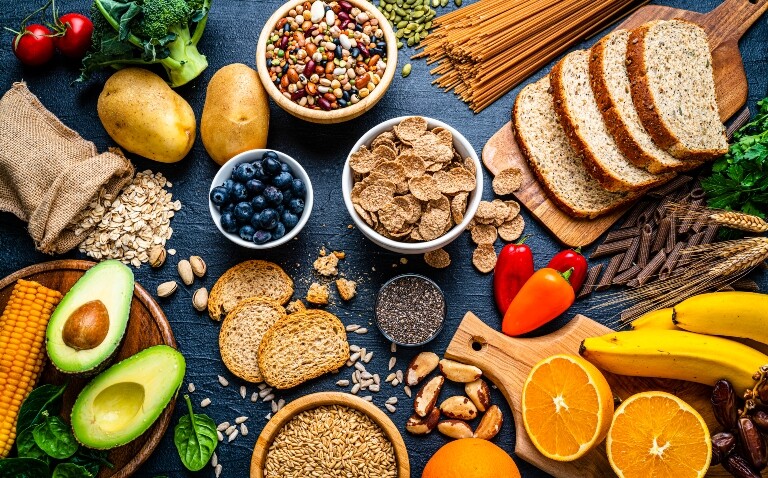
Patients who regularly consume a healthy diet that is rich in plant-based foods such as fruit, vegetables and wholegrains, may benefit from air pollution having less impact on their lung function, a comparative study has found.
Findings from the study which analysed UK Biobank data was exclusively presented at the European Respiratory Society Congress.
The researchers aimed to investigate whether eating specific food groups could modify or potentially mitigate the harmful effects of air pollution on lung function.
Air pollution levels exceed WHO guidance
‘Over 90% of the global population is exposed to air pollution levels that exceed World Health Organization (WHO) guidelines,’ explained Pimpika Kaewsri, a PhD student from the Centre for Environmental Health and Sustainability at the University of Leicester, England, who led the study. ‘Ample research has shown that exposure to higher air pollution levels is associated with reduced lung function. Separately, a healthy diet – particularly one high in fruit and vegetables – has been linked to better lung function.’
UK Biobank data taken from around 200,000 participants were analysed to assess individual dietary patterns, including their fruit, vegetable and wholegrain intake to determine their healthy diet score (HDS). This was compared with each participant’s lung function, including their forced expiratory volume in 1 second (FEV1) level and their exposure to air pollution in the form of fine particulate matter (PM2.5 concentration).
Other factors such as age, height, location and socioeconomic status of the participants were also adjusted for.
The researchers found for every increase in exposure to PM2.5 of five micrograms per cubic metre of air, there was a 78.1ml reduction in FEV1 in the low fruit intake group, compared to only a 57.5ml reduction in the high fruit intake group in women.
Participants in the highest HDS tertile had higher FEV1 than those in the lowest (difference +41.7ml; 95% CI:35.4 to 48.1). However, PM2.5 was associated with reduced lung function in all fruit intake groups. Low HDS -94.3ml (95% CI-105.2 to -83.5), medium HDS -83.2ml (95% CI: -97.1 to -69.3) and high HDS -70.1ml (95% CI: -83.2 to -57.1).
Four portions of fruit per day most beneficial
‘Our study confirmed that a healthy diet is linked to better lung function in both men and women regardless of air pollution exposure,’ Ms Kaewsri said. ‘And that women who consumed four portions of fruit per day or more appeared to have smaller reductions in lung function associated with air pollution, compared to those who consumed less fruit.’
It is thought that this may partly be explained by naturally occurring antioxidant and anti-inflammation compounds. ‘These compounds could help mitigate oxidative stress and inflammation caused by fine particles, potentially offsetting some of the harmful effects of air pollution on lung function,’ she said.
A point of note from the study population was that men generally reported having a lower fruit intake than women. ‘This difference in dietary patterns may help explain why the potential protective effect of fruit against air pollution was only observed in women,’ Ms Kaewsri highlighted
The researchers now plan to explore whether diet can influence changes in lung function over time.
‘Residual confounding cannot be ruled out’
The University of Leicester study confirmed the potential respiratory benefits of a healthy diet, particularly one that’s rich in fresh fruit intake. But Professor Sara De Matteis, chair of the European Respiratory Society’s expert group on occupational and environmental health, based at University of Turin in Italy, noted the study’s limitations. Professor Matteis was not involved in the research.
‘Access to a healthy diet is not equally distributed in the population, and even if the authors adjusted for socioeconomic status, some residual confounding cannot be ruled out,’ she said. ‘A healthy plant-rich diet should be promoted in the population starting from primary school, not only for preventing chronic diseases, but also to reduce the carbon footprint of meat-rich diets.’
link